The Future of Beauty Is Rooted in Truth - And Luyana Is Leading the Shift
PEOPLE & STORIESMEET THE FOUNDER
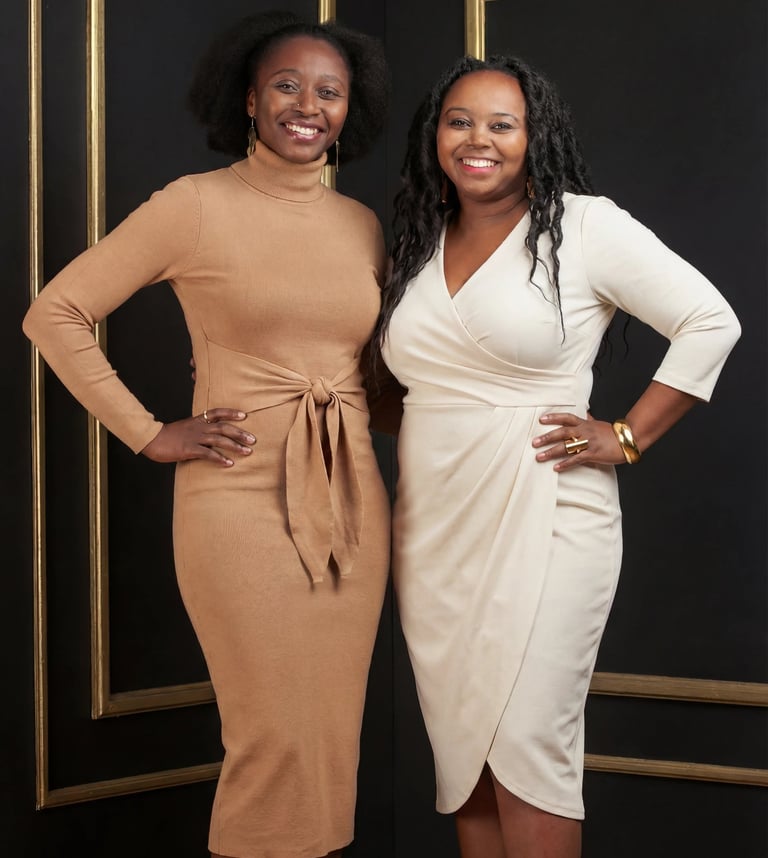
Names: Mari-Anne Daura, Melinda Daura
Title/Profession: Founder, CEO & Founder, COO
Based in: Denmark
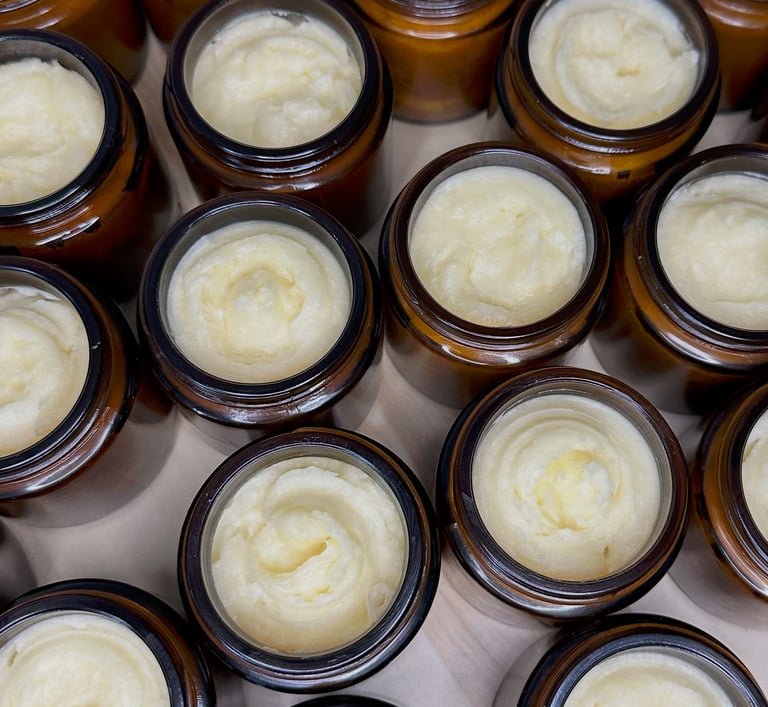
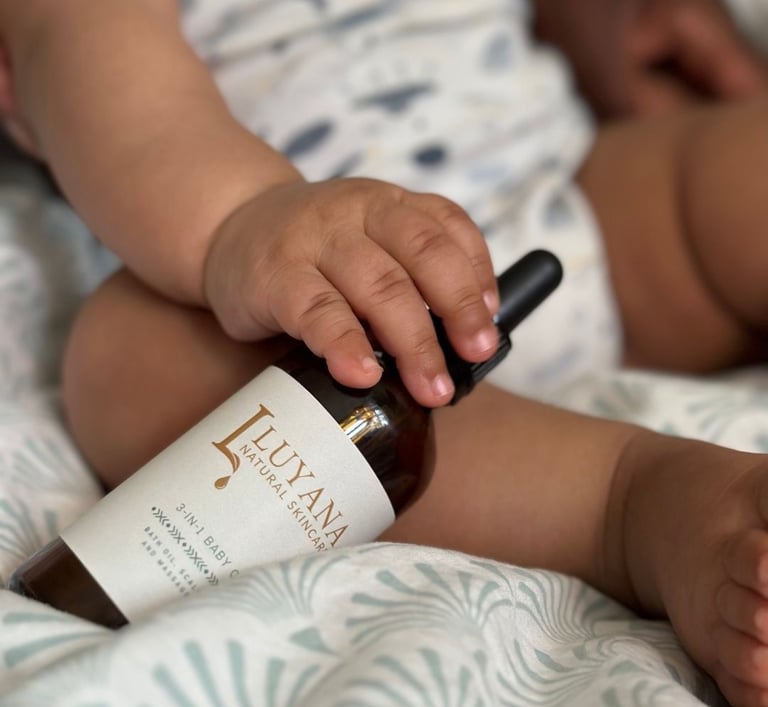
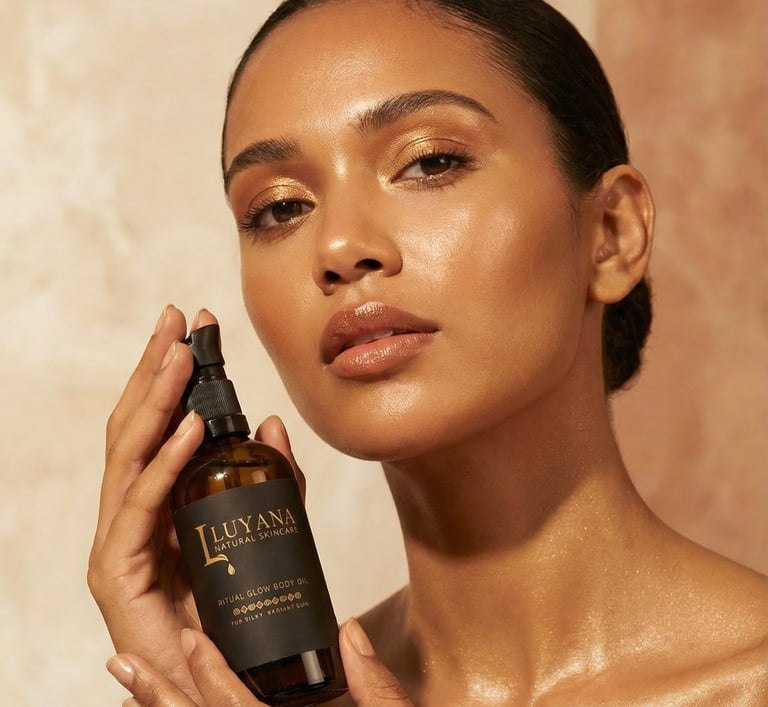
Business: Luyana | @luyanaskincare
Website: https://luyanaskincare.com/
Some brands begin with a vision. Others begin with a question that refuses to go away.
For sisters Mari-Anne and Melinda, that question was rooted in trust. What started as a personal search for skincare they could genuinely believe in quickly revealed something deeper — a landscape shaped by unclear claims, inconsistent standards, and a lack of transparency.
From that moment, Luyana began to take shape.
Built in Copenhagen and grounded in African botanical heritage, the brand reflects a meeting point between tradition and modernity, between lived experience and scientific rigor. It is not just about what goes into a product, but about the systems, stories, and people behind it.
In this conversation, Mari-Anne and Melinda share their journey - from corporate careers to building a brand that challenges the way we think about beauty, wellness, and responsibility.
Mari-Anne and Melinda, before Luyana existed, what were you each pursuing - and did you ever imagine you would build a skincare brand together?
Before Luyana, we were both deep in corporate careers. Melinda had spent years in IT and business consulting at Accenture before moving into compliance and data analysis at Novo Nordisk, where she developed deep expertise in regulatory standards, internal audits, and the kind of rigorous documentation that most consumer brands never think about. Mari-Anne had worked in communications - writing, advising and reporting for donor and leadership audiences - across sustainability, human rights and sexual and reproductive health, including time at the UN and IKEA, where she came to believe that business could be a true drive for positive impact in the world.
The idea came from a personal frustration. We were trying to find clean skincare products that we actually trusted, and we kept hitting the same wall: misleading claims and opaque ingredient lists. At some point we stopped looking for the brand we wanted and started building it.
Looking back, our backgrounds shaped Luyana more than we realised at the time. The rigor that pharmaceutical compliance demands, and the commitment to transparency that comes with human rights and sustainability communications, turned out to be exactly the foundation a brand like this needs. We did not plan it that way, but it makes sense.
Growing up as daughters of African immigrants in the U.S., how did your upbringing shape your understanding of beauty and self-care?
We grew up between two worlds. Our mother would talk about ingredients and rituals from back home, things she had learned from her own mother. Meanwhile, what was actually available to us were conventional products that were not formulated with people of colour in mind, let alone with any real consideration for wellbeing or self-care.
Growing up in the United States, beauty always felt like something that was not meant for us. That experience stayed with us. In many ways it is one of the reasons we started this company.
What surprised you most when you began researching what actually goes into conventional skincare?
What surprised us most was how little oversight exists in parts of the skincare industry, particularly in the United States. Generally speaking, the FDA does not approve cosmetic products or ingredients before they reach consumers, meaning a product can reach shelves without any independent safety review.
Regulations are stronger in Europe, but even here in Scandinavia we still encountered misleading marketing when searching for genuinely clean products. One of the most surprising practices was what is often called 'ingredient dusting', when a brand highlights a trendy or beneficial ingredient on the label even though it is present in extremely small amounts, sometimes less than 0.01%. Technically it is in the formula, but at that level it is unlikely to deliver any meaningful results.
Discovering this only deepened our commitment to full transparency, and to formulating with ingredients at concentrations that are actually proven to make a difference.
The beauty industry is saturated with “clean” claims. In your view, what truly differentiates conscious skincare from clever marketing?
It is actually one of the reasons we started Luyana. We wanted to buy skincare that was free from harmful ingredients, but kept running into brands using the language of clean beauty without the substance behind it.
For us, what truly differentiates conscious skincare comes down to three things: integrity, intention and traceability. It is not just about what goes into the formula. It is about the people behind the supply chain, the environmental footprint, and whether the brand can actually stand behind every decision it makes to get the product into your hands.
We see conscious skincare as an evolution of the clean beauty movement, and one that holds itself to a much higher standard.
Luyana blends African botanical heritage with Scandinavian minimalism. How did that dual influence come together organically?
Luyana is rooted in African botanical heritage. Many of the ingredients we use, like baobab, marula and African black soap, are part of beauty rituals that have been passed down through generations of women. In our case, that wisdom came directly through our own family and communities, so it was never something we had to search for. It was already part of who we are.
Building the brand in Copenhagen brought a different kind of influence. Scandinavian design culture has a deep commitment to simplicity, restraint and intentionality, and that philosophy shaped how we thought about formulation. When we began developing Luyana we realized the two approaches complemented each other naturally. African botanical knowledge is rich and time-tested. Scandinavian minimalism asks you to use only what is necessary. Together they produce something we think is genuinely distinctive.
Do you ever feel pressure to position yourselves within a specific narrative - African brand, Scandinavian brand, diaspora brand - and how do you navigate that?
Yes, sometimes. There can be an expectation to fit neatly into one narrative, either as an African brand, a Scandinavian brand, or a diaspora brand. But our reality does not sit comfortably in just one of those categories.
Luyana is deeply rooted in African botanical heritage and the beauty wisdom passed down through generations of women. At the same time, the brand was built and formulated in Copenhagen, where we have been shaped by Scandinavian values of simplicity, transparency and thoughtful design.
Rather than choosing one identity, we see ourselves as part of a new generation of diaspora-founded beauty brands that are bridging worlds. We honour the depth and integrity of African ingredients while presenting them in a modern, globally relevant way. That intersection is not something we try to resolve, it is actually our starting point.
Building a brand as sisters adds another dimension. What has that dynamic taught you about leadership and trust?
Building a brand as sisters adds a very personal dimension to leadership. There is an inherent level of trust because we have known each other our entire lives. We understand each other's values, instincts and motivations in a way that is genuinely hard to replicate in a typical business partnership.
At the same time, it has taught us the importance of communication and real respect for each other's strengths. We come from different professional backgrounds, and learning to lean into those differences has made us stronger leaders. It requires humility to let the other person lead in areas where they naturally thrive, and that is something we have both had to practice.
What makes it especially meaningful is that we are not just building a company together. We are honouring a shared heritage and the beauty traditions that were part of our upbringing. Building Luyana together feels like continuing a story that started long before us, one rooted in family, culture and the women who came before us.
How do you define wellness today, compared to how you might have defined it ten years ago?
Ten years ago, we probably would have defined wellness in a more external way - products, routines, and the idea of achieving a certain standard of appearance. Today our understanding is much more holistic.
Wellness is about alignment: how we care for our bodies, the ingredients we choose to put on our skin, and whether the people and processes behind those ingredients are treated with the same care. It is about transparency, sustainability and respecting traditional knowledge that has existed long before the modern beauty industry.
Building Luyana has also taught us to see wellness as something collective - and reciprocal. When the ingredients we use support women's livelihoods across Africa and protect the ecosystems they come from, wellness stops being a personal pursuit. It reaches further: the consumer returns to ritual and slowness, and the people behind the product are sustained by that same act of care.
What has been the most difficult part of doing things differently in an industry driven by speed and trends?
The beauty industry moves incredibly fast. New trends, ingredients and product launches appear almost every week, and there is constant pressure to chase what is next.
For us, the most difficult part has been resisting that pace. Our philosophy is rooted in simplicity and integrity, formulating thoughtfully, working closely with ingredient partners, and taking the time to understand what truly benefits the skin. That slower approach does not always align with an industry built on constant novelty.
And yet the conversation around African beauty right now gives us pause. African beauty is increasingly being talked about as the next big trend, and while we welcome the growing interest, we want to be clear: African beauty is not new. It is not a trend. It is a return to ancient wisdom, to ingredients and rituals that generations of women on the continent have always known and used. What is happening now is not a discovery. It is a reclaiming.
That perspective is actually what keeps us grounded when the pressure to move faster feels loudest. We are not building toward a trend cycle. We are building something that was always true.
Looking ahead, what kind of impact do you hope Luyana has - not just on skin, but on the wider conversation around beauty and wellness?
Our hope is that Luyana helps broaden the conversation around where beauty knowledge comes from and who gets recognised for it. African botanical traditions hold an incredible depth of knowledge about skin health and natural ingredients, yet they have not always been acknowledged in the global beauty industry. The world has embraced Korean skincare philosophy wholeheartedly - and rightly so. We'd love to see the same openness extended to Africa.
As consumers become more ingredient-aware and sustainability becomes central to luxury, we think a real shift in perspective is coming. Some of the most remarkable botanical resources in the world come from Africa, and the future of truly meaningful luxury skincare will increasingly look in that direction. The knowledge, the ingredients, and the ritual have always been there. Luyana wants to help make that visible - and to show that Africa has always been a source of wisdom, luxury and abundance.
Related Stories
Thrive Century © 2025
Because the choices we make today will determine the world we leave behind.
Stay Inspired. Live Better. Thrive.
Join the Thrive Century Newsletter and get the latest in wellness, sustainability, and mindful living—delivered straight to your inbox.
We care about your data in our privacy policy.